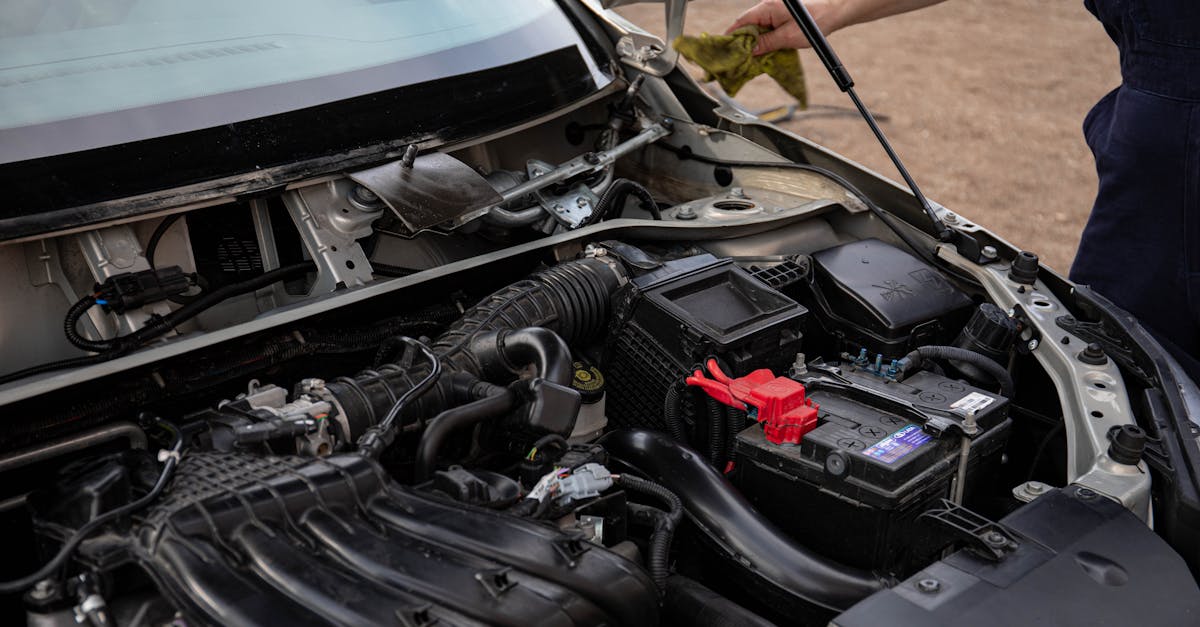
A Clicking Car Engine Does Not Always Point to the Battery
You turn the key, and instead of the satisfying rumble of your engine, you hear a rapid-fire click-click-click. Instantly, your mind probably jumps to a dead battery. “Classic dead battery,” you mutter, already bracing for a jump-start or a trip to the auto parts store. In my experience working with vehicles, this is the most common knee-jerk reaction, and while a drained battery is certainly a frequent culprit, it’s far from the only reason your car might be making that concerning clicking sound. What changed everything for me in diagnosing these issues was learning to look beyond the obvious. Relying solely on the battery as the source of the problem can lead you down the wrong path, wasting time and money on solutions that don’t address the real issue. Understanding the less obvious reasons behind that clicking sound empowers you to pinpoint the problem more accurately and get your car running smoothly again.
Key Takeaways
- A rapid clicking sound during ignition often signals a deeper issue than just a dead battery.
- Corroded or loose battery terminals can restrict power flow, mimicking a dead battery.
- A failing starter motor will struggle to engage, producing a distinct clicking noise without turning the engine.
- Insufficient engine oil can increase friction, making it harder for the starter to turn the engine over.
Corroded or Loose Battery Terminals Restrict Power Flow
The mistake I see most often is overlooking the simplest connection points: the battery terminals. Even if your battery has a full charge, if the connection to the car’s electrical system is compromised, it won’t be able to deliver enough amperage to the starter motor. The starter, receiving insufficient power, will rapidly click as it tries and fails to engage. I’ve seen countless times where a driver spends money on a new battery, only to find the problem persists because they didn’t check the terminals.
What actually works is to visually inspect your battery terminals first. Look for white or blue-green powdery corrosion around the posts. This buildup acts as an insulator, blocking the electrical current. More critically, check for looseness. Grab each terminal connector and try to twist it. If it moves easily, it’s not making a solid connection. The fix is straightforward: disconnect the battery (negative first, then positive), clean the terminals and posts thoroughly with a wire brush and a baking soda-and-water solution, rinse, dry, and then reconnect them tightly. In my experience, even a seemingly minor layer of corrosion can reduce electrical conductivity by 30-50%, creating symptoms identical to a dead battery.
A Failing Starter Motor Creates a Distinct Clicking
Beyond the battery, the starter motor itself is a prime suspect for clicking. This component is responsible for turning the engine over to initiate combustion. It’s a complex electrical and mechanical unit, and like any mechanical part, it wears out over time. When a starter motor begins to fail, it may receive power from the battery but lack the internal strength to actually spin the engine. The clicking you hear in this scenario is often the starter solenoid, a smaller component within the starter, attempting to engage the larger starter motor, but the motor simply can’t complete its job.
What changed everything for me in diagnosing starter issues was understanding the type of click. If you hear a single, louder click, or a series of clicks that sound less like a machine gun and more like hesitant attempts, and the engine doesn’t even try to crank, the starter motor is highly suspicious. To confirm, you can try a basic test: have someone turn the key while you gently tap the starter motor (usually located at the bottom of the engine, near the flywheel) with a rubber mallet or the end of a broomstick. This can sometimes temporarily jar a failing starter motor into working, giving you one last crank. If this works, it’s a strong indicator you need a new starter. I’ve personally seen this trick save someone from being stranded more than once, buying them enough time to get to a repair shop.
Low Engine Oil Increases Friction, Straining the Starter
Here’s a non-obvious reason that often surprises people: extremely low engine oil. While the primary function of oil is lubrication, critical components like the crankshaft and camshaft require smooth, low-friction movement for the engine to even begin turning over. If the oil level is critically low, or if the oil itself is degraded and no longer lubricating effectively, the internal friction within the engine can become so significant that the starter motor struggles to turn it. It’s like trying to push a heavy box across rough asphalt versus a polished floor; the starter simply can’t overcome the resistance.
What actually works is checking your engine oil religiously, not just when a warning light comes on. Pull out your dipstick (with the engine cool and on level ground for an accurate reading), wipe it clean, reinsert it fully, pull it out again, and observe the oil level. It should be between the ‘min’ and ‘max’ marks. If it’s below the minimum, add the appropriate type and amount of oil. The engine needs a baseline level of lubrication to allow the starter to function efficiently. In my garage, I once had a client who had been struggling with intermittent clicking for weeks, convinced it was an electrical gremlin. A simple oil top-up, which revealed the dipstick was nearly dry, solved the problem instantly. It’s a reminder that sometimes the most basic maintenance can prevent complex-seeming failures.
Failing Alternator Prevents Battery Recharging
While an alternator doesn’t directly cause a clicking sound, its failure can lead to one. The alternator’s job is to recharge your car’s battery while the engine is running and power the electrical systems. If your alternator is failing or has completely died, your battery won’t get recharged. You might be able to start the car once or twice on a residual charge, but eventually, the battery will drain. When the battery charge drops below a critical threshold, it won’t have enough power to fully engage the starter motor, resulting in that familiar clicking sound. This is a common misconception: people often replace the battery when the real issue is the component charging the battery.
What changed everything for me in diagnosing alternator issues was understanding the typical failure pattern. If your car starts after a jump, but then dies shortly after, or if the clicking returns quickly, it’s a strong sign the alternator isn’t doing its job. Another clue is if your headlights dim noticeably when the engine is running or if you notice other electrical components (like the radio or power windows) behaving erratically. Many auto parts stores offer free battery and alternator testing, which can quickly confirm a failing alternator. Ignoring a dying alternator means you’ll repeatedly face a dead battery, and possibly a clicking starter, no matter how many times you jump or replace the battery. Addressing the alternator directly is the only lasting solution in this scenario.
Immobilizer System Malfunction
Modern cars are equipped with immobilizer systems designed to prevent theft. These systems typically involve a transponder chip in your car key communicating with a receiver in the ignition or engine control unit (ECU). If this communication fails, even if your battery is perfectly fine, the car’s computer will prevent the engine from starting. Instead of cranking, you might hear a clicking sound as the car attempts to engage the starter, but the immobilizer quickly cuts power, creating a frustrated clicking loop. This is a subtle, often overlooked issue, especially in older modern vehicles where the transponder chip might be worn or the receiver malfunctioning.
What actually works to diagnose this is to pay attention to your dashboard warning lights. Many cars will display a specific immobilizer warning light (often a key symbol or a car with a key inside) if there’s a problem. Try using your spare key – if the spare key works, it indicates an issue with your primary key’s transponder chip. If neither key works, the problem likely lies with the car’s immobilizer receiver or ECU. This is usually not a DIY fix and requires specialized diagnostic tools that a dealership or a qualified automotive locksmith would possess. I once spent an entire afternoon troubleshooting a clicking car, only to realize the immobilizer light was subtly flashing, pointing to a worn transponder in the client’s sole car key. A new key resolved the mystery instantly.
Frequently Asked Questions
Can a bad battery still show a full charge?
No, a truly bad or dead battery won’t show a full charge. However, a battery with insufficient cold cranking amps (CCA) might show a good voltage reading but still lack the power to crank the engine, especially in cold weather. This happens when internal plates are sulfated or damaged, reducing the battery’s ability to deliver current. The clicking happens because the starter tries to pull a large current, and the compromised battery can’t deliver it.
How long does a starter motor usually last?
On average, a starter motor lasts between 100,000 to 150,000 miles, or about 8 to 10 years. However, this can vary significantly based on driving habits (frequent short trips with many starts can wear it out faster), climate, and manufacturing quality. Early signs of wear often include slow cranking, grinding noises, or the clicking sound before total failure.
Can cold weather cause my car to click but not start?
Yes, absolutely. Cold weather significantly impacts battery performance by reducing its chemical reaction efficiency, thus lowering its available power. Engine oil also thickens in cold temperatures, increasing internal friction and making it harder for the starter motor to turn the engine. The combination of a weaker battery and increased resistance can easily result in a clicking sound without a successful start, even with a healthy battery.
Is it safe to try jump-starting if I suspect a starter issue?
Jump-starting is generally safe to try, even if you suspect a starter issue, as long as you connect the cables correctly. If the car still only clicks or struggles to crank after a successful jump connection, it points more strongly to a starter or other mechanical issue rather than just a dead battery. However, if you notice any smoke, burning smells, or extreme heat from the battery or starter during the attempt, stop immediately.
What’s the difference between a single click and rapid clicking?
A single, louder click often suggests the starter solenoid is engaging but the main starter motor isn’t spinning, pointing to a failing starter motor or severe power deprivation (e.g., extremely corroded terminals). Rapid, repetitive clicking, on the other hand, typically indicates that the battery has some charge, but not enough to engage the starter fully, causing the solenoid to rapidly cycle on and off as it tries to draw power.
Conclusion
The next time your car greets you with that unsettling click instead of a roar, resist the urge to immediately blame the battery. As we’ve explored, that seemingly simple sound can be a distress signal from several different components. By systematically checking your battery terminals, listening to the type of click, verifying your engine oil level, considering your alternator’s health, and being aware of your immobilizer system, you can move from educated guesswork to accurate diagnosis. Empower yourself with this knowledge, and you’ll not only save time and money but also gain a deeper understanding of your vehicle’s needs. The first step you should take is to pop your hood and inspect those battery terminals – it might be the easiest fix you ever make.
Written by Ben Carter
Personal finance, productivity hacks, ethical living
A former high school civics teacher who believes good citizenship starts with good daily habits.
You Might Also Like

60 Minutes to a Cleaner Home: Why Most Speed Cleaning Fails
Discover why common speed-cleaning methods don't work for lasting results and how a strategic 60-minute approach actually transforms your home.

7 Non-Obvious Reasons Your Car Won't Start (Beyond a Dead Battery)
Discover 7 unexpected reasons your car won't start, from parasitic drains to fuel system quirks, beyond the usual dead battery diagnosis.

Secure Your Home Wi-Fi from Eavesdroppers and Unauthorized Access
Learn to secure your home Wi-Fi from eavesdroppers and unauthorized access with practical, non-obvious steps.